
ATN Cars
Optimising Driver Operations for a Vehicle Logistics Network
Preview
Case Study
ATN Cars
Optimising Driver Operations for a Vehicle Logistics Network
Overview
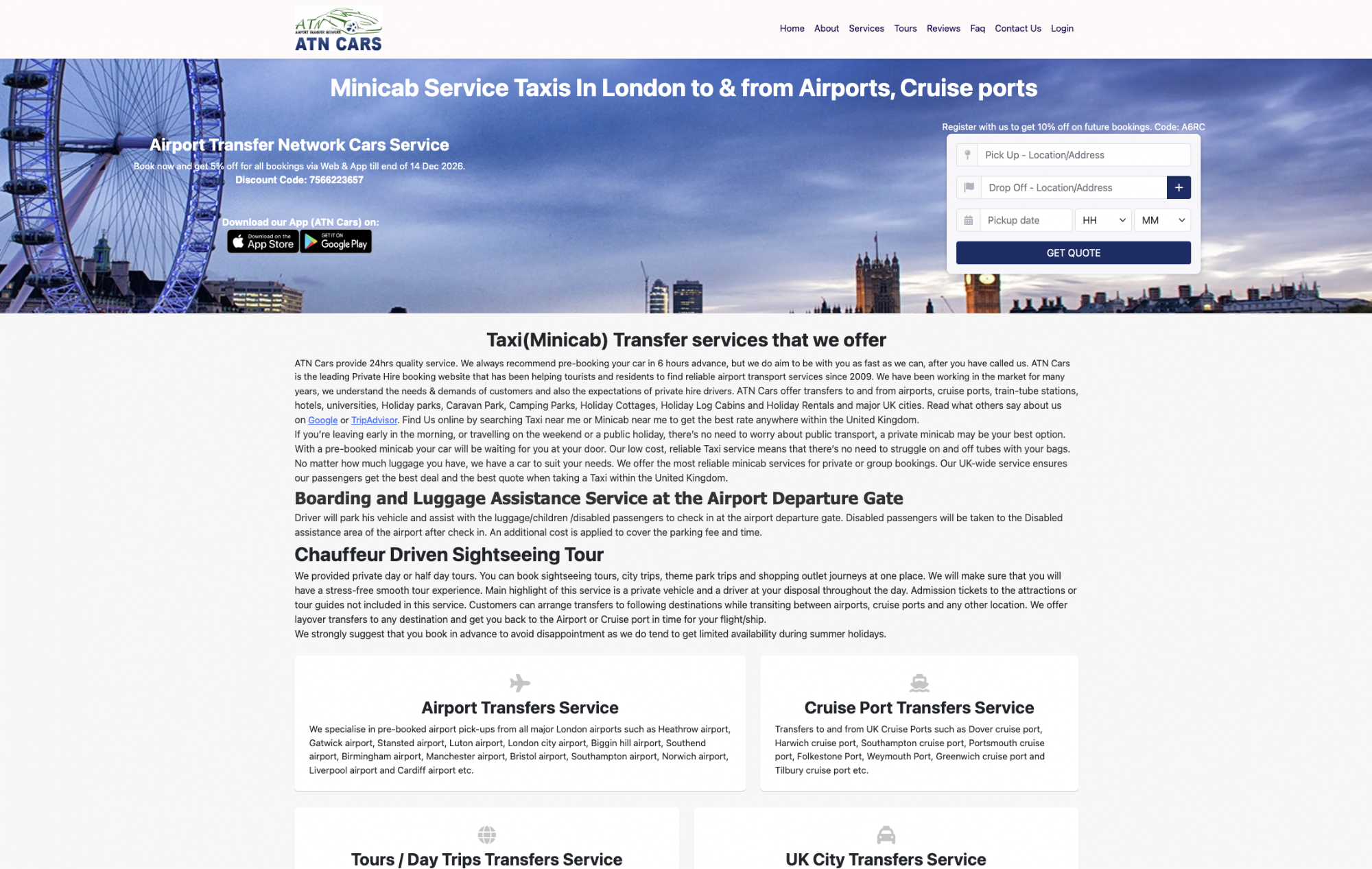
ATN Cars is a vehicle transportation company that helps customers move vehicles across cities and regions through a network of independent drivers.
Before the platform was introduced, much of the company's operational planning relied on manual processes. Assigning drivers, tracking availability, planning return journeys, and managing operational expenses required significant coordination and often resulted in unnecessary costs.
I was responsible for designing and building a digital platform that helped automate these workflows and improve operational efficiency across the business.
The Problem
The company relied on a distributed network of freelance drivers who were responsible for collecting and transporting vehicles to customer destinations.
While assigning drivers to jobs was relatively straightforward, the business faced several operational challenges:
- Finding the most suitable available driver for each assignment.
- Coordinating driver schedules and availability.
- Managing long-distance transportation jobs.
- Reducing costs associated with return journeys.
- Tracking accommodation and travel expenses.
- Managing ferry and transportation charges.
- Monitoring driver locations and job progress.
One of the biggest challenges was that drivers frequently completed deliveries far from their home locations, resulting in expensive and inefficient return trips.
The business wanted a system that could optimize assignments while minimizing operational waste.
The Solution
The platform was designed to manage the complete lifecycle of vehicle transportation jobs while helping the business make more informed assignment decisions.
The system introduced:
- Driver availability management.
- Job assignment workflows.
- Route-aware driver selection.
- Location tracking.
- Google Maps integration.
- Expense management.
- Operational monitoring.
The goal was not simply to assign jobs but to improve how the entire transportation network operated.
Key Challenges & Solutions
Intelligent Driver Assignment
When new transportation requests were created, the platform evaluated:
- Driver availability.
- Driver location.
- Working schedules.
- Job proximity.
Drivers received job notifications through the application and could accept or reject assignments based on their availability.
Optimizing Return Journeys
One of the most valuable features addressed a major cost issue for the business.
Instead of treating each delivery as an isolated job, the system analyzed whether additional jobs existed along or near the driver's return route.
This allowed the business to:
- Reduce empty return trips.
- Improve driver utilization.
- Lower transportation costs.
- Increase operational efficiency.
Driver Work Hours & Accommodation Planning
Long-distance assignments introduced additional complexity.
The platform monitored estimated travel durations and identified when trips exceeded normal working hours.
When required, the system:
- Suggested accommodation stops.
- Allowed drivers to upload expense receipts.
- Tracked reimbursable costs.
- Improved compliance with operational policies.
Ferry & Travel Cost Management
Certain transportation routes required ferry crossings and additional travel expenses.
The system incorporated these costs into operational planning and job calculations, providing greater visibility into delivery profitability.
Real-Time Operational Visibility
Through Google Maps integration and location tracking, dispatch teams could monitor job progress and driver locations throughout the delivery lifecycle.
Technologies Used
- PHP
- Slim Framework
- AngularJS
- Ionic
- MySQL
- Google Maps APIs
- Mobile Applications
- Location Tracking
Outcome
The platform transformed a heavily manual operational process into a structured digital workflow.
By combining driver management, route planning, expense tracking, and intelligent assignment logic, the system helped the business improve visibility, reduce operational inefficiencies, and make more informed transportation decisions.
More importantly, the project taught me that great software is not always about technology. Sometimes the biggest impact comes from deeply understanding how a business operates and building systems that help it make better decisions every day.
My Role
I was responsible for gathering requirements directly from the founder, understanding business challenges, designing solutions, and implementing the platform. My responsibilities included: * Product planning and solution design. * Backend development using PHP. * Frontend development using AngularJS. * Driver workflow implementation. * Google Maps integration. * Job assignment systems. * Expense tracking functionality. * Application deployment and support. This was one of the earliest projects where I worked closely with business stakeholders to translate operational challenges into software solutions.